Thursday, February 13, 2014

All About Fat Loss


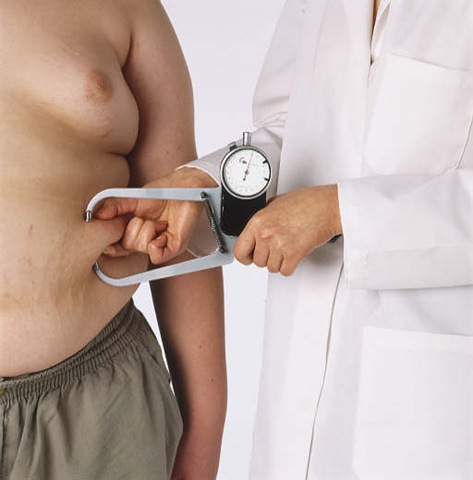
There are so many questions about fat. What is it?  Why is it stored in different areas?  What is the most effective way to lose it?  Although most people spend a great deal of time and money trying to lose fat, it is vital to the proper function on your cells. Fat has a key role in the flexibility and structure of cell membranes, affects immune function, and is an energy reserve. Did you know that it has been estimated that a lean adult male stores 131,000 calories in fat? That is enough energy reserve to keep him alive for roughly 65 days. The majority of your fat stores are in the form of triacylglycerols in storage cells called adipocytes. Whether your body stores fat or releases it into the bloodstream is based on caloric supply and demand. When energy supply is high, insulin keeps fat inside adipocytes. During exercise or periods of fasting insulin is lowered releasing fat into the bloodstream where it is carried by proteins to cells where it can be broken down into ATP (energy for your muscles) or stored.

Now that we know what fat is and how it is stored, let’s look at what is the best way to burn already stored fat cells. As previously stated, fat storage and use is determined by an energy surplus or deficit. Meaning to lose fat, we need to create an energy deficit. Furthermore, insulin plays a major role in fat storage and release. The lower your insulin levels are (either by exercising or altering food intake) the more fat will be released and used as an energy source to meet energy demands placed on the body. This is why a lower carbohydrate diet is generally effective in weight loss (lower carbohydrates mean lower insulin levels).   

Exercise intensity also plays a role in fat loss. Research finds that we burn the most fat when exercising at low to moderate intensities. When exercising at high intensities the majority of your energy comes from the breakdown of carbohydrates instead of fat.  Now does this mean that exercising at a high intensity isn’t good for fat loss? Let’s not jump to conclusions. We also have to consider exercise recovery. After we finish exercising our bodies need to use more energy to help cells recover and replace lost glycogen. In short, our metabolisms are running at a much higher rate. And this happens at the most accelerated rate after bouts of high intensity resistance training. 

So, what is the most comprehensive attack against fat? The answer is an exercise program that alternates between high-intensity training and moderate-intensity training on different days while eating a lower carbohydrate-reduced calorie diet. This maximizes the body’s two ways of burning fat: in a single bout of exercise and in recovery. 

So there you have it..."Fat Loss" in a nutshell.  Still have questions?  Be sure to talk with one of our fitness professionals and/or nutrition specialists for more info.  Good luck!! 


Tuesday, February 11, 2014

The Myths and Facts About Fighting Obesity: What Is Scientifically Sound?


There are many ideas circulating about the best way to promote fat loss, change lifestyles, and maintain the changes you make. Today, let’s look at a few of the popular ideas surrounding weight management.

  • Small lifestyle changes are enough to lose a significant amount of weight and keep it off. 
Though efforts like parking further from your destination are a good place to start, latest research is showing that this may not help as much as we would like to think. The fact is that the amount of time in which we are sedentary greatly outweighs the effort of walking 20 extra yards once a day. Experts say once again the most effective means of substantial weight loss and management is consistent dietary management and exercise. 
  •  Setting realistic goals is the best approach. 
The current thought about goal setting is to create a small manageable goal and progress once that goal is reached; however leading fitness professionals are recommending a more progressive approach. Personal trainers are familiar with this concept, and there is no reason that you should not be too: micro goals and macro goals. Set a higher weight loss goal but then break it down into smaller goals. This will allow you to celebrate small successes while continually challenging you to meet your true goal.  Click HERE to review a previous blog entry on goal setting.
  • Rapid weight loss is always bad
Researchers are saying this is not always true. The key is finding a program that is sustainable.
  • Regularly eating breakfast prevents obesity
Researchers have found that a person’s baseline breakfast habits set the nutritional standards for the rest of the day. So a healthy breakfast fostered healthier eating for the remainder of the day, but an unhealthy breakfast led to poor meal choices for the duration of the day.  Click HERE to read a blog about eating breakfast.
  • Eating more fruits and veggies results in weight loss. 
Research has concluded that there is no evidence to support or reject this theory. Eating fruits and veggies allows you to reap the nutritional benefits, but if the key in weight loss is creating a calorie deficit. 

Still frustrated and confused about how to go about losing weight the safe and effective way?  Schedule an appointment with one of our trainers AND one of our nutrition specialists.  Let's talk about what got you to where you are today and how we can help you with your "scientific body transformation".  Remember, all you have to do is ask for help...we won't turn you away.


This blog was adapted from: "What Really Works In fighting Obesity."  IDEA Fitness Journal. Jan 2014 pp 16-17

Monday, February 10, 2014

Just Beet It, Beet It, Beet It....

Did you catch that?  Nope it wasn't a typo.  Today's blog is about that ugly red (and sometimes yellow) root vegetable you walk past in the produce section...the beet.  Growing up in a house full of beet-lovers, my sister and I used to complain when our Mom was boiling beets.  We used to say that it smelled like she was cooking dirty socks.  Our poor Mom had to listen to that every time she made beets...and let me tell you, she ate them A LOT!!  There was nothing worse than walking in the house on a weekend afternoon and getting a whiff of cooked beets.  Now, based on that you would think that I HATED beets, right?  I used to until about 5 years ago.  Ironic thing is now I can't get enough of them!!

OK, enough about my childhood trials and tribulations.  Let's talk about the nutritional value of the beet first.  The beet is on the top 100 "World's Healthiest Foods".  Beets are known for their antioxidant, anti-inflammatory, and detoxification properties.  This root vegetable can be completely consumed as you can eat the beet (also known as beetroot), the little bit of root attached to the body of the beet, and the greens.  Here is a chart that shows all of the nutrients found in one cup of sliced, cooked beets.


Beets, sliced, cooked
1.00 cup
170.00 grams
Calories: 75
GI: med
NutrientAmountDRI/DV
(%)
Nutrient
Density
World's Healthiest
Foods Rating
folate136.00 mcg34.08.2excellent
manganese0.55 mg27.56.6very good
potassium518.50 mg14.83.6very good
copper0.13 mg14.43.5very good
fiber3.40 g13.63.3good
magnesium39.10 mg9.82.4good
phosphorus64.60 mg9.22.2good
vitamin C6.12 mg8.22.0good
iron1.34 mg7.41.8good
vitamin B60.11 mg6.51.6good

As you can see, beets are an excellent source of folate, manganese, potassium, and copper.  Eating beets is another great way to get iron and vitamin B6.  You can click on each of the nutrients above to learn a little more about them.  As with any vegetable, the longer you cook/boil/steam/roast beets, the nutritional value decreases.  It is recommended to keep cooking time for steaming beets under 15 minutes and roasting time under one hour.  This will help maintain the integrity of the nutrients.

Now that you know a little more about beets, let's talk about what to do with them.  If you are a fan of juicing your vegetables, beets are a great addition to your favorite mixture.  Try grating raw beets and adding them to your soups and salads.  Here's a yummy recipe for 15-Minute Steamed Beets:

Prep and Cook Time: 5 minute prep; 15 minute cooking
Ingredients:


  • 3 medium beets, about 3" in diameter
  • 1 medium clove garlic, pressed or chopped
  • 2 tsp fresh lemon juice
  • 1 TBS balsamic vinegar
  • 3 TBS extra virgin olive oil
  • sea salt and cracked black pepper to taste
  • Optional:
  • 1 TBS balsamic vinegar
  • 10 fresh basil leaves, chopped
  • 1 TBS chopped dill
  • 1 TBS chopped chives
  • 2 TBS Feta cheese
Directions:
  1. Fill the bottom of a steamer with 2 inches of water.
  2. While the water is coming to a boil, wash beets, leaving 2 inches of tap root and 1 inch of the stem on the beets. Cut beets into quarters. Do not peel.
  3. Steam covered for 15 minutes. Beets are cooked when you can easily insert a fork on the tip of a knife into the beet. Although some of their colorful phytonutrients are lost to the steaming water, there is plenty of color and nutrients left in the beets.
  4. Press or chop garlic and let sit for 5 minutes to bring out their health-promoting properties.
  5. Peel beets using a paper towel.
  6. Transfer beets to a bowl and toss with remaining ingredients while they are still hot.
Serves 2
 
Be forewarned...beet juice will stain so use caution when peeling and cutting beets.  You can use a little lemon juice to help remove the stains from cutting boards and counter tops.  Add lemon juice and course salt to your hands and scrub gently to remove the "red finger" syndrome! 

If you are still looking for a few more healthy beet recipes, click HERE and you can check out some yummy ways to serve beets.  In the meantime, don't pass those dirty looking red vegetables the next time you are in the produce section.  Grab a bunch and give them a try.  You might find that they don't smell like dirty socks when cooking and possibly have a new veggie to add to your list of "must-haves".  Enjoy!!


Thursday, January 23, 2014

Take-A-Break Snack Mix Recipe

Here's a yummy snack recipe from the American Heart Association.  For more yummy heart-healthy recipes, go to the AHA website by clicking here.


Ingredients

Cooking spray
¼ cup sliced almonds
1 tablespoon light brown sugar
2 teaspoons water
1/4 teaspoon ground cinnamon
1/8 teaspoon ground nutmeg
2 cups whole-grain oat cereal with yogurt-flavored coating
2 cups whole-grain wheat and bran flakes with raisins
1/2 cup dried unsweetened cranberries
1/2 cup dried unsweetened blueberries


Cooking Instructions

Put a piece of aluminum foil about 12 inches square on a platter or baking sheet. Lightly spray with cooking spray. Set aside.
 
In a small nonstick skillet, dry-roast the almonds over medium heat for 2 to 3 minutes, or until lightly golden brown, stirring occasionally.
 
Stir in the brown sugar, water, cinnamon, and nutmeg. Cook for 1 to 2 minutes, or until the liquid has evaporated and the almonds are coated with the mixture, stirring constantly. Transfer to the foil. Let cool completely, 15 to 20 minutes.
 
Meanwhile, in a medium bowl, stir together the remaining ingredients.
 
Add the cooled almonds to the cereal mixture, stirring to combine. Store in an airtight container for up to 7 days.

Cook's Tip

For variety, substitute different nutrient-dense dried fruits, such as cherries, apricots, and plums, for the cranberries and blueberries. Cut them into 1/4- to 1/2-inch pieces before adding them to the cereal mixture.

Nutritional Analysis

Per 1/2 cup serving: 
 
Calories Per Serving - 139
Total Fat - 2.0g
Saturated Fat - 0.5g
Trans Fat - 0.0g
Polyunsaturated Fat - 0.5g
Monounsaturated Fat - 1.0g
Cholesterol - 0mg
Sodium - 124mg
Carbohydrates - 28g
Fiber - 4g
Sugar - 15g
Protein - 2g

Dietary Exchanges

1 fruit, 1 starch

Wednesday, January 22, 2014

Which Is Better for Losing Weight: Cardio or Weight Lifting?

If you're looking to lose weight, you might be wondering:  Should I focus on doing cardio or should I weight train?  The answer, for those of you not interested in hanging around for the "why" part of the answer, is both.  What matters most is the way you train, the system you train under, and your lifestyle.

The cardio vs. weight lifting question stems from the days when "cardio" usually meant going to a low-level aerobic class and "weight lifting" meant spending a couple of hours in the “free weight room,” chatting with your buddies between attempts at "out-benching" each other.
These days, most workout programs incorporate both, often during the same workout. Most "cardio" work has an element of resistance training, either in the form of added weight or plyometric movements, while most "weight lifting" work has a cardio element because it's done in circuits.


There are two myths inherent in this age-old question. The first is that weight training will make you bulky. The second is that cardio doesn't build muscle. Let's dispel these once and for all.


Myth 1: Weight Training Will Make You Bulky
Gaining bulk is hard. I wish I had a nickel for every time I've seen a hardcore gym rat who's been lifting for months, desperate for a few pounds of lean muscle mass, blow his stack when he hears a woman say, "Weight training will make me bulky".  It takes a ton of energy for your body to add muscle. During the initial stages of any kind of intense training, especially one you're not used to, your body releases excess amounts of the hormone cortisol, which causes your body to retain water.  Some people think this means they are bulking up when, in reality, it's just the body adapting to the training.  It happens whether you are trying to gain or lose weight and has nothing to do with gaining actual muscle mass.  Once your body adapts to the new training, the cortisol release ceases and your body flushes the excess water.


Myth 2: Cardio Doesn't Build Muscle
This second myth is trickier. Low-level, steady-state aerobic training will atrophy muscle, so it can be true. But "cardio" hasn't meant aerobic zone training since Richard Simmons' heyday in the 80s.  Cardio is a catchall term for any training that elevates your heart rate for the entire workout. These days, since almost all weight training is done circuit style, your heart rate remains elevated during both cardio and weight training workouts. Modern cardio training is almost always an offshoot of interval training, which means it's a mix of aerobic and anaerobic training. And this builds muscle.

What Is the Best Way to Lose Weight?
The best way to lose weight is to follow a solid training system that targets weight loss. A system takes into account your entire lifestyle, workout, diet, sleep, and supplements. Why? Because all of these things affect your body's ability to change.


The key to weight loss is to change your metabolism. While it's easier to alter your metabolism through weight training than cardio, both will do it if the workouts are well designed. The word you're looking for to make this happen is intensity. By that, I mean you need to force your body to work in the anaerobic realm. Because your body depends on air to live, forcing it beyond its ability to breathe causes it to release performance-enhancing hormones to survive. When done consistently, these hormones change your metabolism.


Of course, you'll die if you stay in the anaerobic zone for too long, which is why you only do anaerobic work in short intervals. In between these intervals, your heart is working out aerobically to recovery. As long as the breaks between your anaerobic sets are strategic, you get a powerful cardio workout during every anaerobic workout. For example: circuit weight training—consisting of many sets to failure, with short breaks—is not only a great anaerobic weight training workout, but also a very effective workout for your cardiovascular system as well.
 

The next factor when it comes to boosting your metabolism and losing weight is recovering properly between workouts. This is why having a system is so important. Intense anaerobic training is stressful for your body. You need this stress to change your hormone balance, but if you over stress yourself, it will lead to problems in the form of overreaching and, if you do it too long, overtraining (both responsible for maladies from lack of results to injury or illness). A proper exercise program takes this into account by scheduling different styles of workouts next to each other to create a balance between intensity and recovery.

Your nutrition and lifestyle are very important for proper recovery. The better you eat, the faster you recover. Ditto for sleep. (I don't care how many episodes of Game of Thrones you need to catch up on.) Sleep is when your body produces its natural PEDs (performance-enhancing drugs). So get your shuteye!


All of this is why PROMATx never sells individual workouts that aren't attached to a program—or system—for your training. It's not that doing random exercise isn't good for you...because it can be. However, we design workout systems that synergistically combine aerobic and anaerobic training (along with sundry other types of training, not to mention proper nutrition) to give you results. That way, it's much easier for your body to change its metabolism, and for you to lose weight.


To recap, whether your exercise routine is focused on cardio or weight training has very little to do with whether you'll lose weight. The best training programs have elements of both aerobic and anaerobic training and the important factors for weight loss are: pushing yourself beyond your comfort zone (aka intensity), eating enough to recover (but not too much), and resting enough between your workouts. Balance these factors correctly and your metabolism will shift and the pounds will melt away.

Tuesday, January 21, 2014

Tips For Getting Through Your Toughest Workout

I'm battling a set of depth jumps on minute 36 and I'm getting my butt handed to me. I'm breathing heavily, sweat is dripping onto the rug, and my wet-noodle legs might not allow me to clear the next invisible gap Tony Horton insists I leap over.  I want to quit and do something—anything—else instead of finish what is left of the workout.  But I don't.  For some reason, it's important that I prove to you, a stranger, that I'm no quitter!

Trouble is, that's not entirely true.  Although I stuck this one out, I bail on my workouts more often that I'd like to admit.  I'm too tired.  I'm too pressed for time. I'm already too ripped.  Okay, that last one's an overstatement, but you get the idea: I manufacture reasons as to why stopping makes more sense than continuing.


I'm not sure why I do that, or more importantly, how to reverse the process. Thankfully, sports psychologist Dr. JoAnn Dahlkoetter, author of Sports Psychology Coaching for Your Performing Edge: Mental Training for Performance in Sports, Business, and Life, does. Dr. Dahlkoetter has worked with handfuls of top-level athletes—including five Olympic gold medal winners—as well as countless people who simply want to live healthily and look halfway decent naked. She also won the San Francisco Marathon in 1980.  She knows a thing or two about how to make it through your toughest workouts.

1. Mentally Prepare
"People can fail from not being in touch with their bodies," she says. Some PROMATx workouts will wipe you out.  But understanding, embracing, and anticipating that you've signed up to tackle a ball-busting workout can help you size up the challenge and muster the fortitude required to overcome it.


2. Find a Workout Buddy
If during a grueling workout you find yourself taking a break from taking a break after you just got finished taking a break, consider recruiting someone to train with you. Researchers at Kansas State University found that people who train with a more skilled workout partner, who doesn't cheerlead you through the workouts, worked out for longer periods of time.  That's because this competitive attitude supposedly makes you not want to feel like the "weak link" and encourages you to work harder.


3. Get into a Routine
Make your workout session as much of a priority as you would other important daily activities, like brushing your teeth, getting to work on time, or DVRing America's Got Talent. "Build a routine so you're doing [your workout] at the same time each day", Dr. Dahlkoetter suggests. "If you don't have a routine, the workout becomes a low priority that might get overlooked."


4. Make Your Goals Specific
Instead of saying you want to "lose weight" or "look better," come up with specific goals you want to accomplish, like "losing six pounds," or "finally fitting into my wrestling singlet from college."  Those details will offer you something tangible to strive for.  The S.M.A.R.T. (specific, measurable, achievable, realistic, and time-targeted) goal technique has proven to be popular and effective for constructing a plan of attack, whether you're tackling work projects or getting through a workout.  Click HERE to read about how to set S.M.A.R.T. goals.


5. Use the 3 Ps
It sounds pretty hippie, but Dr. Dahlkoetter has "Three Ps"—Positive Images, Power Words, and Present Focus—that can actually help.  Studies show that athletes who visualize themselves winning are more likely to succeed.  Visualize the whole process, from going to bed at the right time to finishing your workout, and you'll be more likely to get through it, improving your overall concentration in the process.  Then, create some "Power Words" to help you push through those super-tough moments. I'm usually spewing four-letter words after about 25 minutes of most of my workouts.  Instead, try this exercise: On a piece of paper, write all of your excuses, self-doubts, and negative thoughts about the workout on the left side. Then, on the right side, write what the opposite of that would be. For example: If you write you're "too tired" on the left side, write your "mind and body are stronger and healthier each day" on the right. When you're lagging, tell yourself those things you've written on the right side of the paper. And, finally, focus on the present. 


From worrying about work to your kids to whether the Kentucky Wildcats are going to make it to the Final Four (go Big Blue!), we all have plenty of daily stresses to contend with. But your workout shouldn't be one of them; in fact, it might be the only hour of the day you get to focus entirely on yourself. To do that and offer your best effort, you need to be present from beginning to end. That said, during your wall sits or another difficult move that doesn't pose a high risk of injury, feel free to let your mind wander to your "happy place."

Monday, January 20, 2014

When Should I Listen to My Cravings???


Cravings can be intense—and often they go way beyond minor hankering. Surely, it can't just be that you want chocolate. There must be some reason that you need chocolate. Come on, please! Just a taste. 
Unfortunately, you probably don't. In most cases, cravings aren't a physiological function telling you what you need. In fact, it's much more like that that they're a dysfunction.  
You might be aware of an infographic floating around the internet featuring foods that people typically crave, along with micronutrients that (supposedly) trigger those cravings. If you desire bread, toast, or pasta, the graphic suggests you need more nitrogen in your diet. Salty foods mean you need chloride, chocolate suggests a need for magnesium, etc. You may notice a complete lack of references at the bottom of this chart. That's probably because there's no science backing up these claims—whatsoever. While the craving might stem from something more obvious—sugar, for example—it's highly unlikely that your "need" for chocolate means you need more magnesium in your diet.  
Why Do I Crave Chocolate and Other Foods That Aren't Good For Me?
Cravings are far more complex than this cause-and-effect chart suggests. While a subtle nutrient need may be partly to blame, cravings arise for several reasons and tend to include a tangled web of psychology, hormones, and other physiological issues.  
Let's go back to the chocolate/magnesium connection. By the time chocolate gets to the milked-down form most Americans consume, there's not much magnesium left. One ounce of milk chocolate contains just 4% of the recommended daily value for magnesium. Dark chocolate has 16%.  Why would the body seek out a food for a specific nutrient when that food has very little of that nutrient? Wouldn't it make more sense that your body would crave foods richer in magnesium, such as nuts, leafy greens, or beans? Your chocolate cravings probably exist for more insidious reasons. Some research shows similarities between chocolate cravings and alcohol addiction, in that both alcohol and cacao contain similar neuroactive alkaloids (chemicals that tweak your melon). In other words, research suggests that chocolate is addictive.  
Another reason you could be craving that brownie is because of your emotional history with it. It's one of the great American comfort foods. We're brought up identifying chocolate with birthdays, Halloween, post-soccer game ice cream outings, and all those magic moments when you were a good little boy or girl who deserved a reward. If you can't see how that would etch a positive association neural pathway deep into your gray matter, we need to get Dr. Freud on the horn, stat.  
Furthermore, unless you like chewing on cacao nibs (and some people do!), the chocolate you consume is filled with sugar—and sugar cranks up the "feel good" hormone serotonin (among other chemicals) levels in your brain, giving you a feeling of mild euphoria. When it's gone, you want more. Combine this sugar hit with the emotional issues and you've got one powerful craving.  
We're not ruling out the possibility of a causal relationship between cravings and micronutrients—but the key word here is possibility. For instance, when first beginning an exercise program, you might find yourself with an irresistible craving for potato chips or salty carbs. By adding a little sea salt to a recovery drink that those cravings my pass. Similarly, pregnant women often crave foods that are high in nutrients they need. For example, she might crave cheeseburgers—an obvious source of calcium and iron.  
If you're convinced that your particular craving stems from a micronutrient deficiency, there's an easy way to test this: supplement the vitamin or mineral you have in mind. Getting back to chocolate, if you buy into the magnesium thing, try supplementing Beverly International UMP. Another angle would be to embrace the psychology aspect of cravings so that you can indulge yourself, but in a healthy way.
Maybe sometimes. With all this talk of micronutrients, we've overlooked another possible root cause for your craving—a macronutrient deficiency. You could be craving certain foods—or certain food types—because your balance of carbs, protein, and fat is off. While it's a stretch to assume your body desires a food because it contains trace amounts of a certain mineral, the causal link between foods and macronutrients (carbs, protein, and fat) is obvious. Eat a piece of carb-heavy cake and you're going to spike your blood sugar.  
If you think this may be the case, feed the craving with healthy food. If you're craving sweet things, increase your fruit and veggie intake. If you crave greasy foods, increase your raw nut or avocado (good fats) intake. If you find yourself craving meat and cheese, increase your lean protein intake with chicken, fish, eggs, and legumes. If you do this and it doesn't work, odds are that your cravings are more psychologically based.  
If you're deliberately eating at a calorie deficit, this method can be a problem. Ultimately, you're not getting enough of any macronutrient. In these situations, it might be useful to adjust the balance of carbs/protein/fat in your diet.
Cravings suck. And when you're trying to lose weight, they suck even more, as calorie deficits tend to increase cravings. In our most frustrated, "give-me-the-donut-before-I-kill-someone" moments, we'd all like a simple solution. Unfortunately, it doesn't exist. Finding your way around cravings requires a little patience and experimentation. It's just a matter of finding a healthy substitute, a little willpower—or some combination thereof.